Before any successful construction project begins, understanding the ground beneath the structure is essential. Geotechnical investigations play a critical role in determining soil, rock, and groundwater conditions to ensure infrastructure is designed safely, efficiently, and sustainably.
From residential buildings and highways to bridges, ports, and industrial developments, geotechnical investigations provide the scientific data needed to minimize risks and support long-term structural stability.
What Are Geotechnical Investigations?
Geotechnical investigations involve the collection, analysis, and interpretation of subsurface information to evaluate the engineering properties of soil, rock, and groundwater conditions at a proposed construction site.
These investigations help engineers understand:
- Soil composition and strength
- Groundwater conditions
- Rock characteristics
- Bearing capacity
- Settlement risks
- Slope stability
- Seismic and vibration behavior
The information gathered forms the foundation for safe engineering design and construction planning.
Why Geotechnical Investigations Matter
1. Ensuring Foundation Stability
Every structure depends on a stable foundation. Without understanding the ground conditions, buildings and infrastructure may experience:
- Excessive settlement
- Structural cracking
- Uneven foundation movement
- Foundation failure
Geotechnical investigations help engineers determine the most suitable foundation system based on site-specific conditions.
2. Reducing Construction Risks
Unexpected ground conditions can lead to:
- Delays
- Increased project costs
- Structural redesigns
- Safety hazards
Early geotechnical investigations help identify potential subsurface challenges before construction begins, reducing costly surprises during project execution.
3. Supporting Safe Infrastructure Development
Infrastructure projects such as:
- Roads
- Railways
- Bridges
- Ports
- High-rise buildings
require accurate geotechnical data to support structural safety and long-term performance.
Engineering decisions based on reliable investigations improve infrastructure resilience and durability.
4. Identifying Soil & Groundwater Conditions
Different soil types behave differently under structural loads. Some soils may:
- Expand when wet
- Compress under pressure
- Erode easily
- Have low bearing capacity
Groundwater conditions can also affect:
- Excavation stability
- Corrosion risks
- Foundation performance
Geotechnical assessments help engineers design structures that respond appropriately to these conditions.
Common Geotechnical Investigation Methods
Modern geotechnical investigations may include:
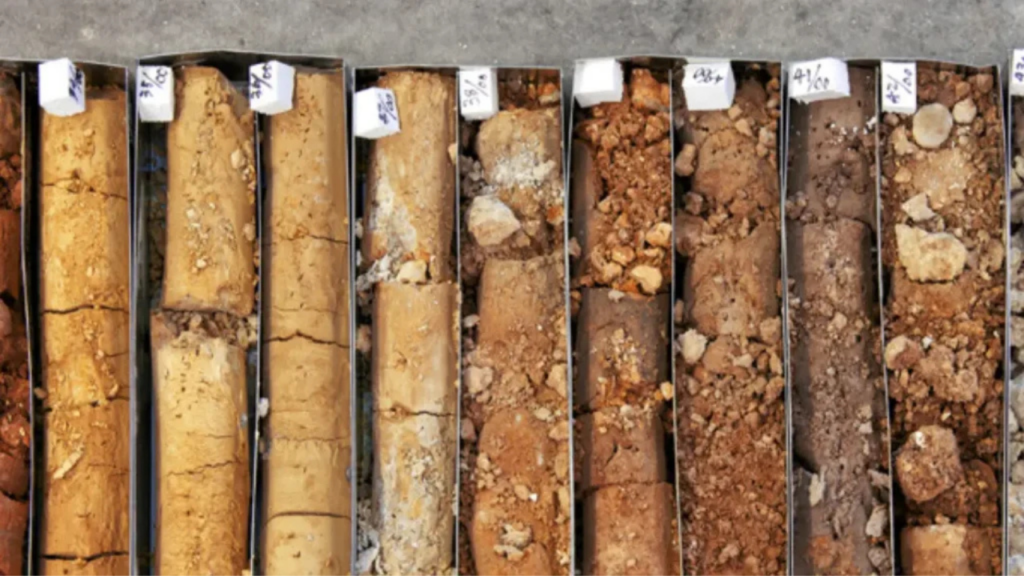
Borehole Drilling & Sampling
Used to collect soil and rock samples from below the ground surface.
Geophysical Surveys
Technologies such as:
- Electrical Resistivity Tomography (ERT)
- MASW
- Seismic Profiling
help map subsurface conditions and identify hidden geological features.
Laboratory Testing
Engineering tests evaluate:
- Soil strength
- Moisture content
- Compaction
- Shear resistance
- Material properties
Groundwater Assessments
Used to determine groundwater levels and hydrogeological conditions affecting construction.
Applications of Geotechnical Investigations
Geotechnical investigations are essential for:
- Residential developments
- Commercial buildings
- Roads & highways
- Marine & coastal infrastructure
- Mining projects
- Rail infrastructure
- Industrial facilities
- Dams & water infrastructure
The Cost of Skipping Geotechnical Investigations
Failure to conduct proper geotechnical studies can result in:
- Foundation failures
- Structural damage
- Increased maintenance costs
- Construction delays
- Safety risks
- Environmental problems
In many cases, the cost of repairs far exceeds the cost of conducting proper investigations before construction begins.
The Role of Advanced Technology
Modern engineering technologies have significantly improved the accuracy and efficiency of geotechnical investigations.
Technologies such as:
- RTK GPS
- GIS Mapping
- ERT Surveys
- MASW Analysis
- Drone Mapping
- Structural Scanning
allow engineers to collect precise data and develop reliable engineering recommendations.
Building with Confidence
Successful infrastructure begins with understanding the ground conditions beneath a project site. Geotechnical investigations provide the critical information needed to support safe design, reduce risks, and improve long-term project performance.
By investing in accurate subsurface investigations, developers, engineers, and project stakeholders can make informed decisions that lead to safer, more resilient, and cost-effective infrastructure development.
Conclusion
Geotechnical investigations are not just a technical requirement — they are a fundamental step in responsible construction and infrastructure planning. Accurate ground investigations help ensure structural safety, minimize project risks, and support sustainable development.
As infrastructure projects become more complex, the importance of reliable geotechnical analysis continues to grow, making it an essential component of successful engineering and construction projects worldwide.